- Get directions
- Share
- Report
- prev
- next
Information
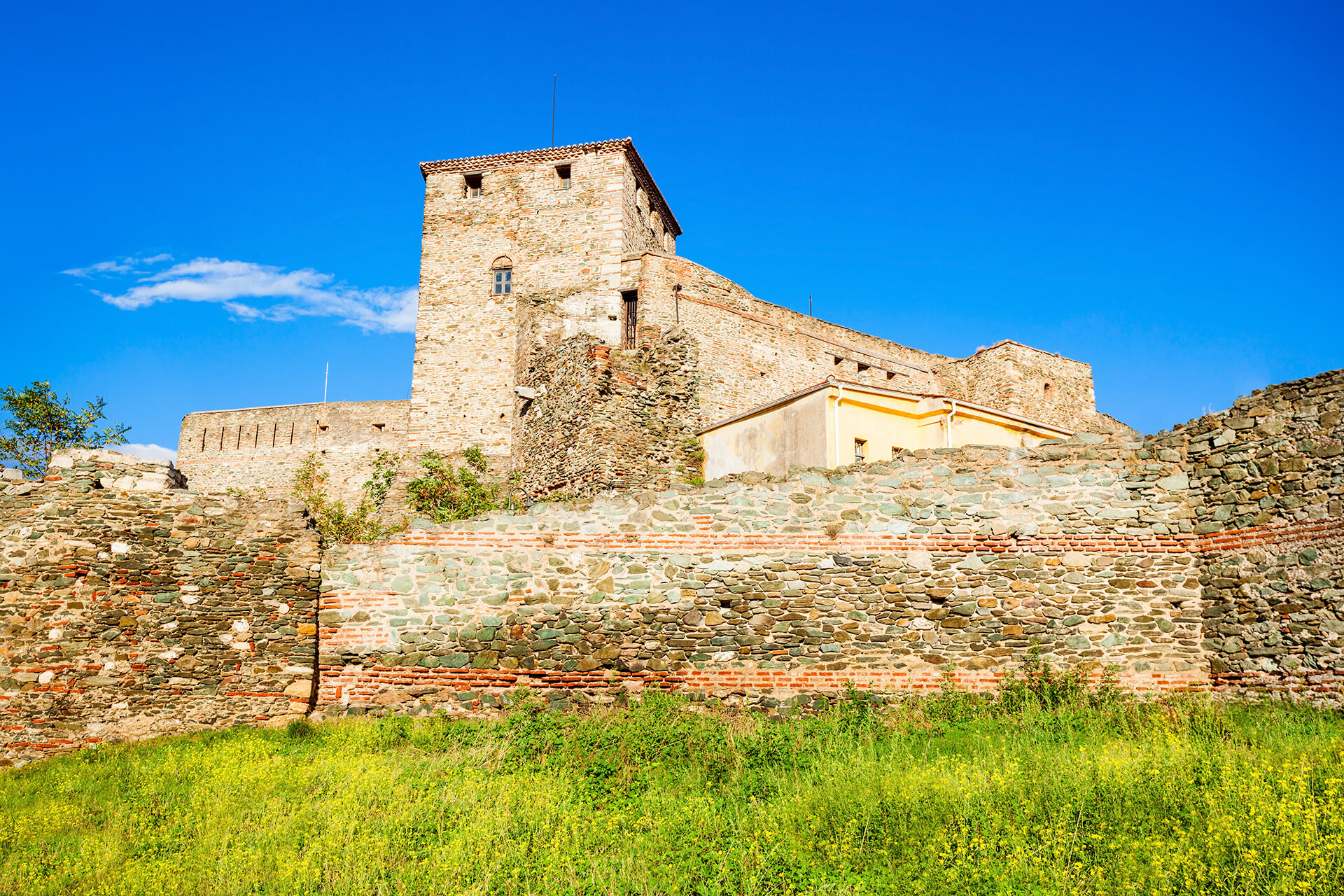
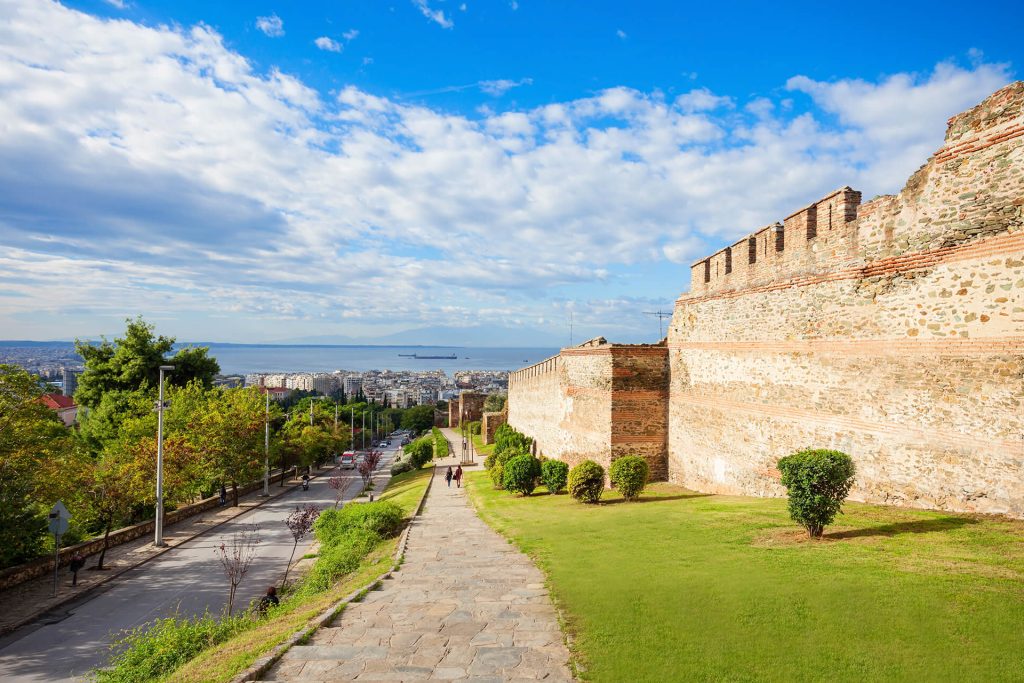
The Thessaloniki Acropolis is located in the northeastern corner of the city and on one of its highest points. It is located just beyond the Vlatadon Monastery and within the northern wall of the city, which has been conserved to an impressive extent.
Visitors to the Acropolis can enter through two massive gates, known as "portares." In ancient times, the Acropolis served as a secondary line of defense for the city in the event of an attack. The "Pyrovolio" or Tower of Trigonio is located next to the eastern gate and offers magnificent views of the city. In fact, it was from this location that the Ottoman Empire launched its invasion of Thessaloniki in 1430.
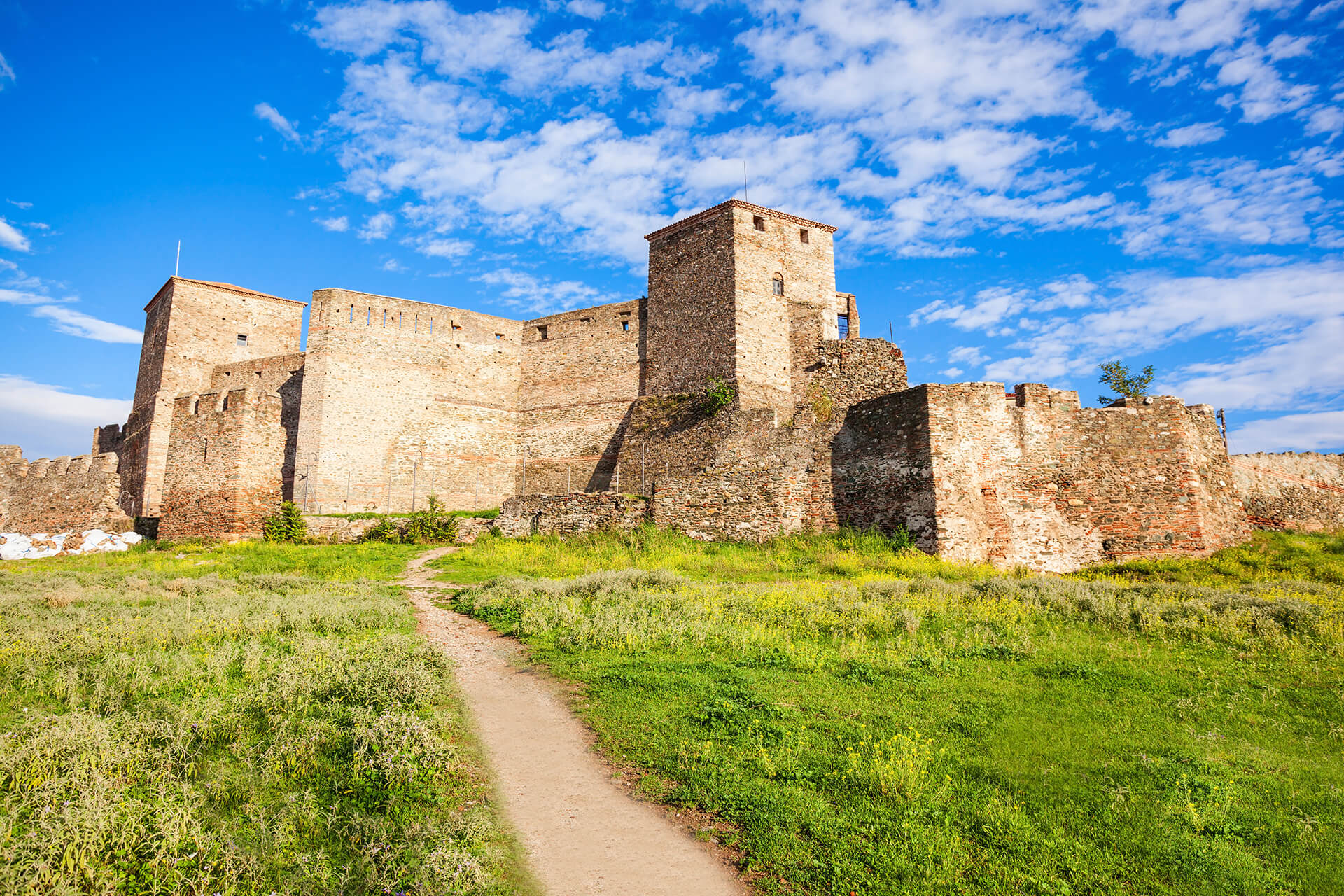
The northernmost section of the Acropolis is colloquially known as "Eptapyrgio." This part of the fortification is also commonly referred to by its Turkish name, "Yedi Kule." It is a fortress from the Byzantine and Ottoman eras located on the northeastern corner of the Acropolis. Despite the name meaning "Fortress of 7 Towers" in both Greek and Turkish, it actually has 10 towers and is thought to have been named after the Yedikule Fortress in Istanbul. The fortress served as the major stronghold of the city's Acropolis and was the headquarters of the garrison commander during Ottoman rule until the late 19th century. After that, it was used as a prison until 1989. The stories of life inside the prison have been passed down through classic Greek rebetika or folk songs that can be heard throughout the country. Restoration and archaeological work at the site have been ongoing since the 1970s with the support of Greek and American universities.
In recent years, the Greek Ministry of Culture and the regional Byzantine Archaeological Service's 9th Ephorate of Byzantine and Modern Antiquities have relocated some of their offices to the Acropolis. They have been undertaking restoration projects for the northeastern curtain wall since 1973 and again between 1983 and 1985, as a result of the damage caused by the 1978 earthquake that greatly affected the city.
The extensive and methodical archaeological research and restoration of the Heptapyrgion began in 1990. The initial phase was completed in 1995 with the completion of a photogrammetric architectural survey and the creation of a digital model of the fortress. Several renowned institutions participate in the relevant archeological projects including the Aristotle University of Thessaloniki, Cornell University, the Center for Preservation and Heritage of Mount Athos and the Municipality of Thessaloniki.
Open
Open 24h today
Toggle weekly schedule
-
Monday
Open 24h
-
Tuesday
Open 24h
-
Wednesday
Open 24h
-
Thursday
Open 24h
-
Friday
Open 24h
-
Saturday
Open 24h
-
Sunday
Open 24h
23/11/2026 08:08 local time
Location
-
Eptapirgiou 130, Thessaloniki
Gallery