
City Scape
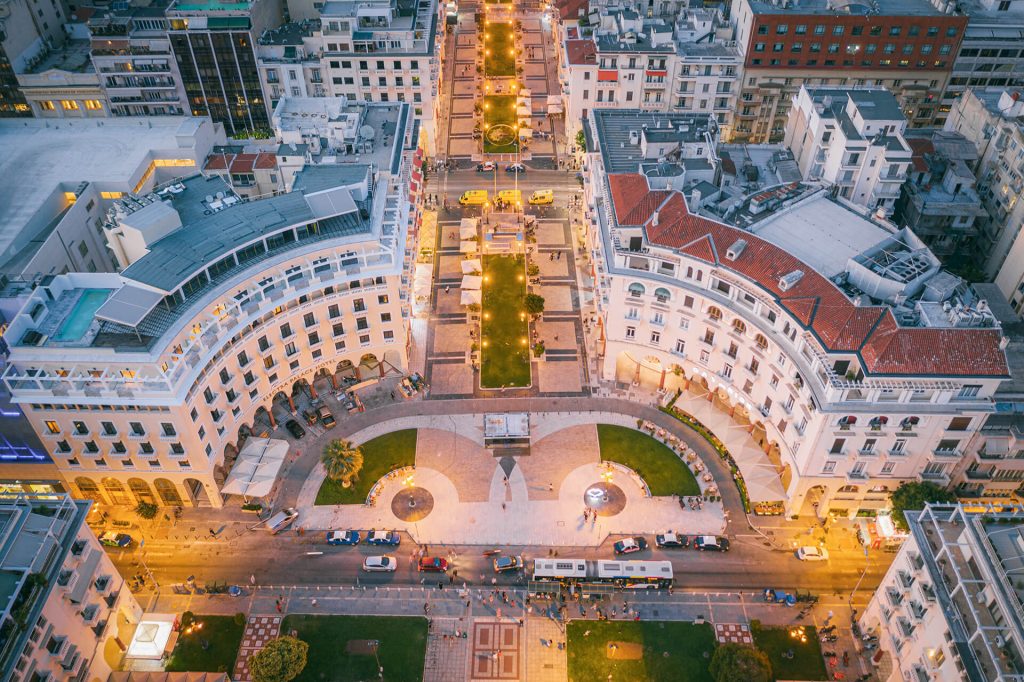
Thessaloniki’s architecture reflects its position as the center of historical developments in the Balkans.
The city was not only commercially significant but also served as the military and administrative hub of the region for centuries. Furthermore, it served as a transportation link between Europe and the Levant, attracting merchants, traders and refugees from all over Europe. As a result of this new era of prosperity, large edifices, including banks, hotels, theatres, warehouses and factories, were constructed in the city center. Notable architects who designed some of the most iconic buildings of the late 19th and early 20th centuries include Vitaliano Poselli, Pietro Arrigoni, Xenophon Paionidis, Eli Modiano, Moshe Jacques, Jean Joseph Pleyber, Frederic Charnot, Ernst Ziller, Roubens Max, Levi Ernst and Angelos Siagas, who mainly used Eclecticism and Art Nouveau styles.
The city’s layout changed significantly after 1870 when the seaside fortifications were replaced with extensive piers and some of the oldest walls surrounding the White Tower were demolished, which now stands as the city’s main landmark. The expansion of Eleftherias Square towards the sea completed the new commercial hub of the city, considered one of the most vibrant squares of the city. As the city grew, workers moved to the western districts, closer to factories and industrial activities, while the middle and upper classes moved gradually from the city center to the eastern suburbs, leaving mainly businesses.
In 1917, a devastating fire destroyed the city’s historic center and much of its architectural heritage, but it also paved the way for modern development, allowing Thessaloniki to create a proper European city center with wider diagonal avenues and monumental squares, which were previously lacking.