
Ano Poli – the old city
- All about Thessaloniki
- Ano Poli - The Old City (Route 22 - Ano Poli)
-
Sep 25
-
5 min read
- Share post
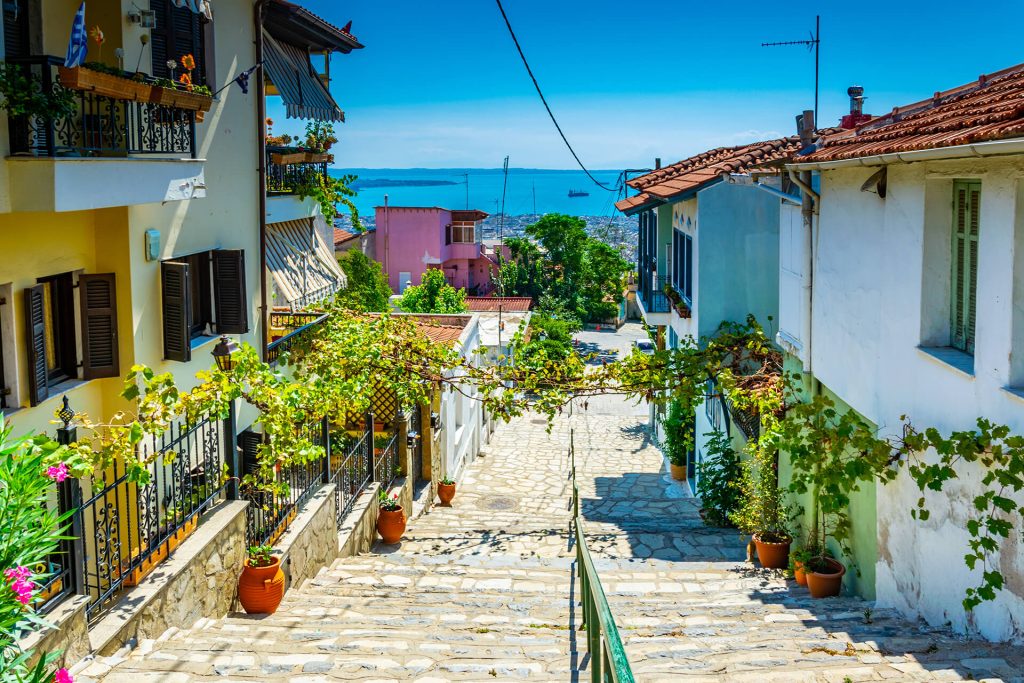
Ano Poli, also known as Upper Town, is the historic district of Thessaloniki situated around the city’s acropolis, to the north of the city center.
As the Ottoman-era city fabric was destroyed in a great fire in 1917, the Upper Town is now considered the most traditional part of the city, featuring small stone-paved streets, old squares and houses in traditional Greek and Ottoman architecture. It is the highest part of the city, dominated by the acropolis, the Byzantine and Ottoman-era fort known as Heptapyrgion and surrounded by the remaining city walls, along with additional Ottoman and Byzantine structures still standing. The Ataturk Museum can also be found in the Upper Town. During the Ottoman period, it was the main district of the Turks, while the Greeks and Jews lived around the port. On clear days, Mount Olympus, can be seen towering on the horizon.
To get there, take bus line 23 towards Ano Poli from Eleftherias Square and get off at the bus station “Palio Terma.” Just opposite the bus station, part of the city wall and stairs going up can be seen. If you follow these stairs, you will reach the Acropolis of Thessaloniki, known as “Eptapyrgio” (Greek) or “Yedi Kule” (Turkish), which means Seven Towers due to the castle inside it. Eptapyrgio was built in the Venetian period (1423-1430) to resist the Turkish threat. The middle tower, which is also the largest, was built by Tsaous Bey, the first Turkish governor of the city. Eptapyrgio housed the city’s prison from the end of the 18th century until 1988 and has now been turned into a cultural center. Walking towards the sea, the Northern Wall can be seen, which was formed until the 12th century. Facing east, a large gate structure (Portara) that used to lead to the Acropolis, the gate of Anna Palaiologina and the Trigonion Tower, the exact point from which the Ottomans invaded the city in 1430. At this point, one can reminisce on the city’s past and present over a lovely coffee or simply enjoy the view of the city and the seafront.
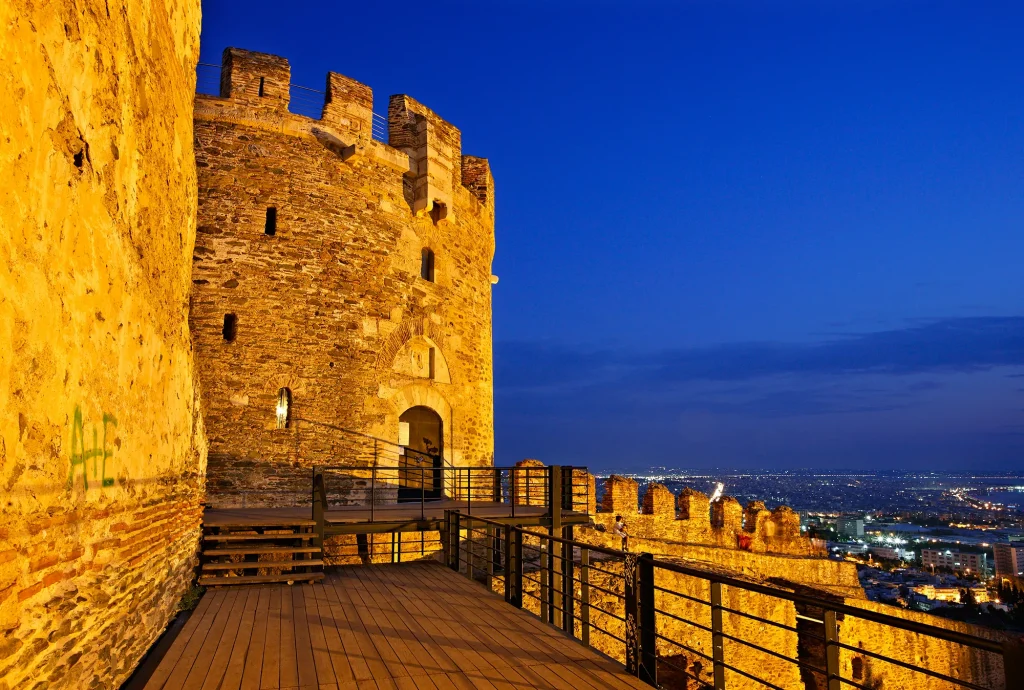
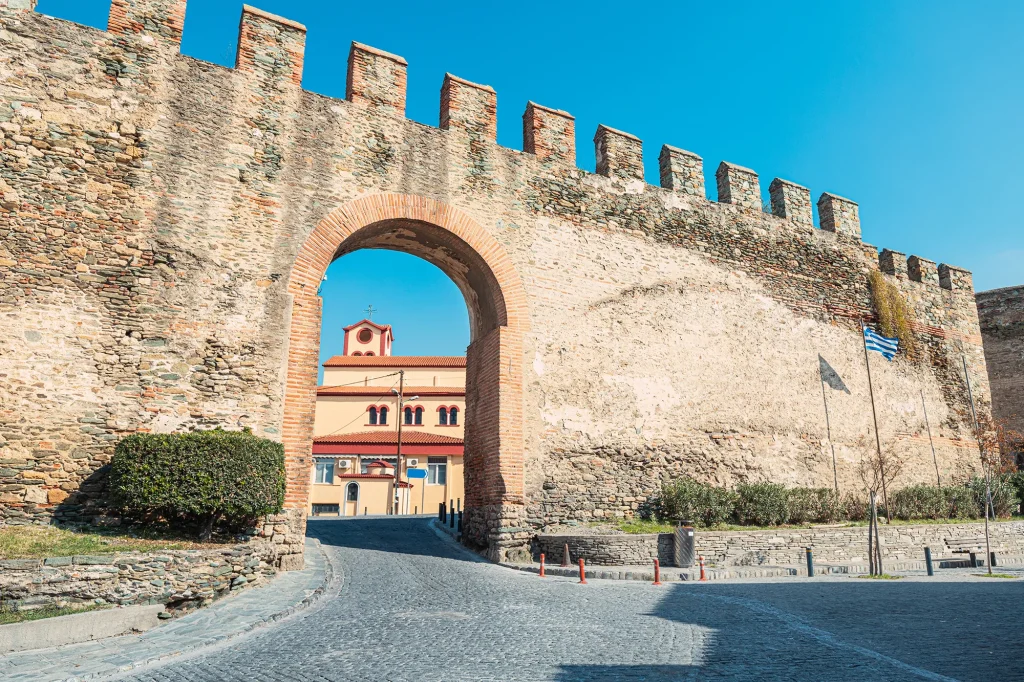
Continuing along the Northern Wall, just before reaching its western end, another big gate (Portara) that used to lead out of the Acropolis can be seen. The entrance to Vlatadon Monastery, founded in the mid-14th century by Vlataioi brother monks, is a few meters away. The panoramic view of the monastery looks out over the city and Ano Poli extends far into the distance to the peaks of Mount Olympus. Another landmark is the Osios David (Latomou Monastery), a humble yet timeless church built in the 5th century, of great archaeological significance as the precursor of the doomed cruciform, with brilliant interior decoration, mosaics and frescoes. In very close proximity, Terpsitheas Square can be reached, with the Tourbes of Musa Baba, an important Muslim chaplain of the Ottoman era.
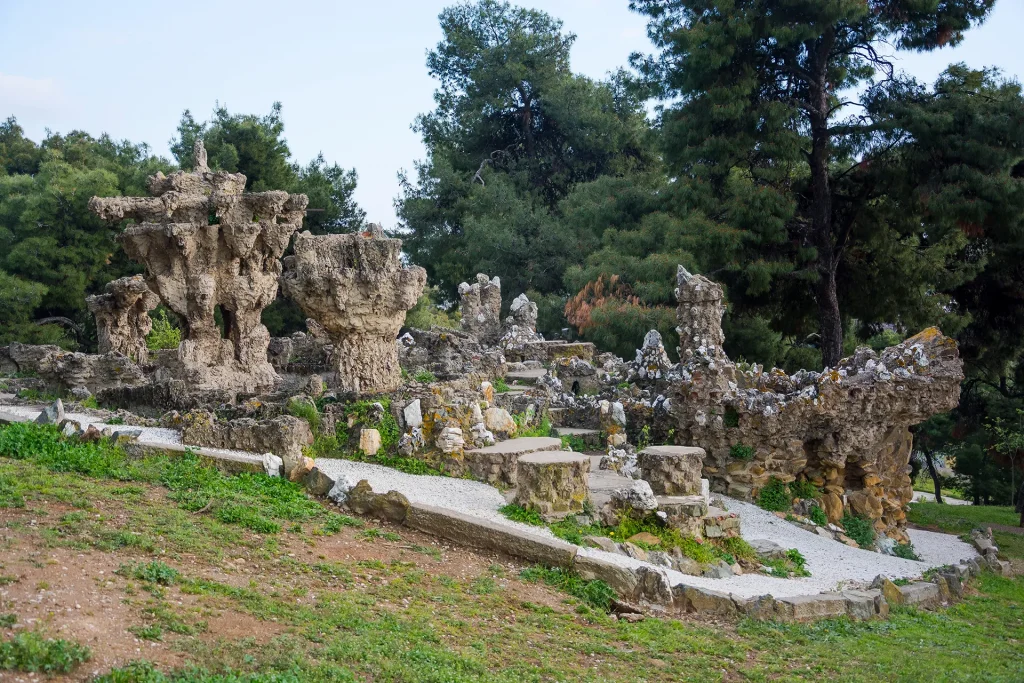
Heading back towards the eastern wall, passing through the narrow, paved streets of Ano Poli will be a unique experience, as this area is the most picturesque of the city. Before reaching the wall, Agios Nikolaos Orfanos, one more site inscribed in the Unesco Heritage List, should not be missed. Walking up the wall and taking the time to relax in the Pasha Gardens, built around 1990-1904 as a “fantasy park” for Seifulah Pasha and his Freemason friends. On your way back, you’ll have the opportunity to visit the Ataturk Museum, the birthplace of Kemal Ataturk, the first leader of modern-day Turkey, back when the city was still known as Selanik.
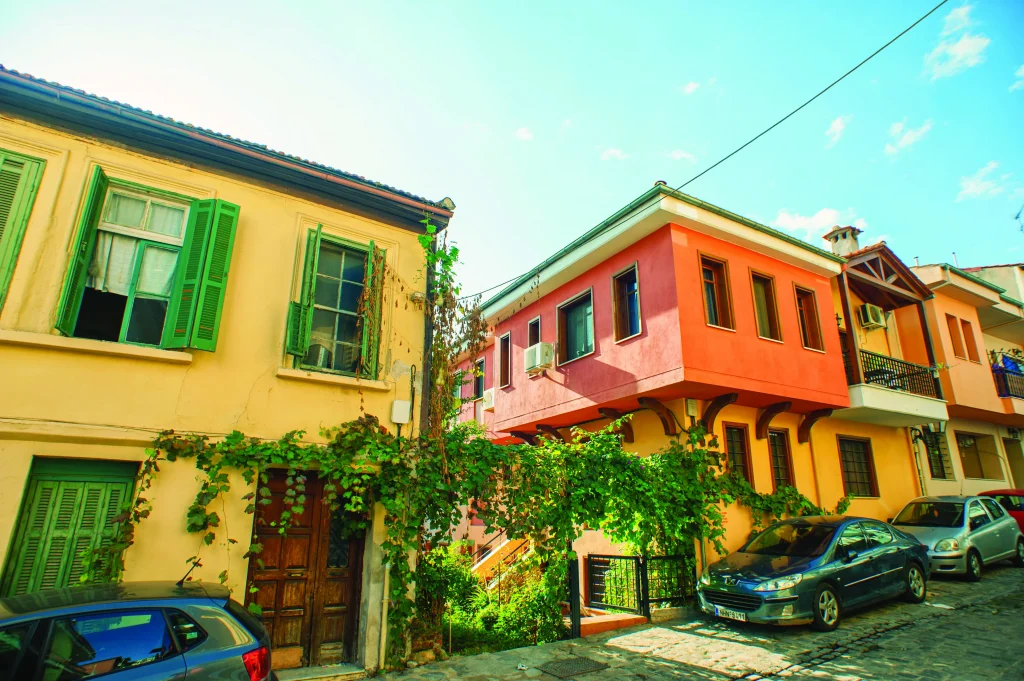
Traditional Greek and Ottoman architecture
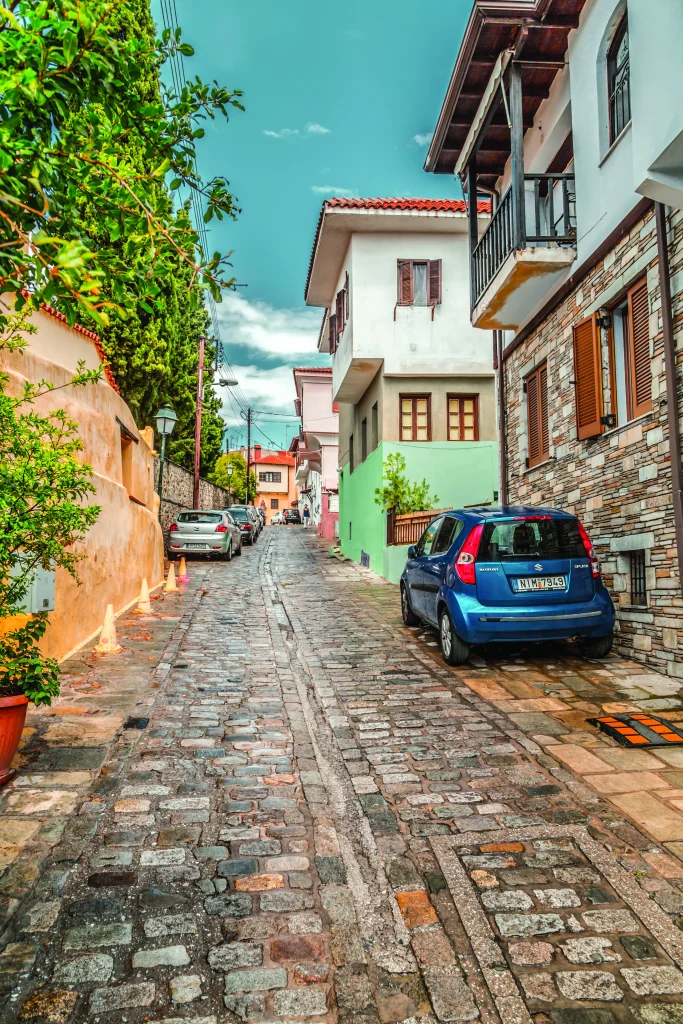
Ano Poli
The area is renowned for its charming collection of small, beautiful restaurants or tavernas that serve delicious culinary representations of Greek hospitality. These are best enjoyed with a fresh juice, a cool glass of wine, or the traditional Greek drink tsipouro, along with a fantastic view of the entire city. Most people would agree that this is one of the most picturesque spots in Thessaloniki, filled with many traditional taverns, cafes and restaurants. The streets wind up and down with old, traditional homes, small alleyways and offer breathtaking views of the city and the Thermaikos Gulf. Most of the restaurants are located on the east side of Ano Poli, near the Portara (Great Door) area. If you find yourself on the northwest side, be sure to visit Tsinari. The name derives from a plane tree (in Turkish cinar) that grows in the area and the namesake cafe, which has been located there since the 19th century on the corner of Clio and Alexandra Papadopoulou street. Opposite the big restaurant, there is a fountain from the Ottoman era and next to it, one can find the remaining architectural features of the 1925 Tsinarli Mosque. The area served as a reception center for refugees in the 1920s and many refugee houses were built next to castles.
An INSIDER TIP: By including Ano Poli on your sightseeing itinerary, you are guaranteed a fantastic experience no matter where you go. And to top it all off, you can end your day with a breathtaking sunset view from a castle, while sipping on a glass of retsina and letting all your worries slip away.