
Thessaloniki Metro (subway)
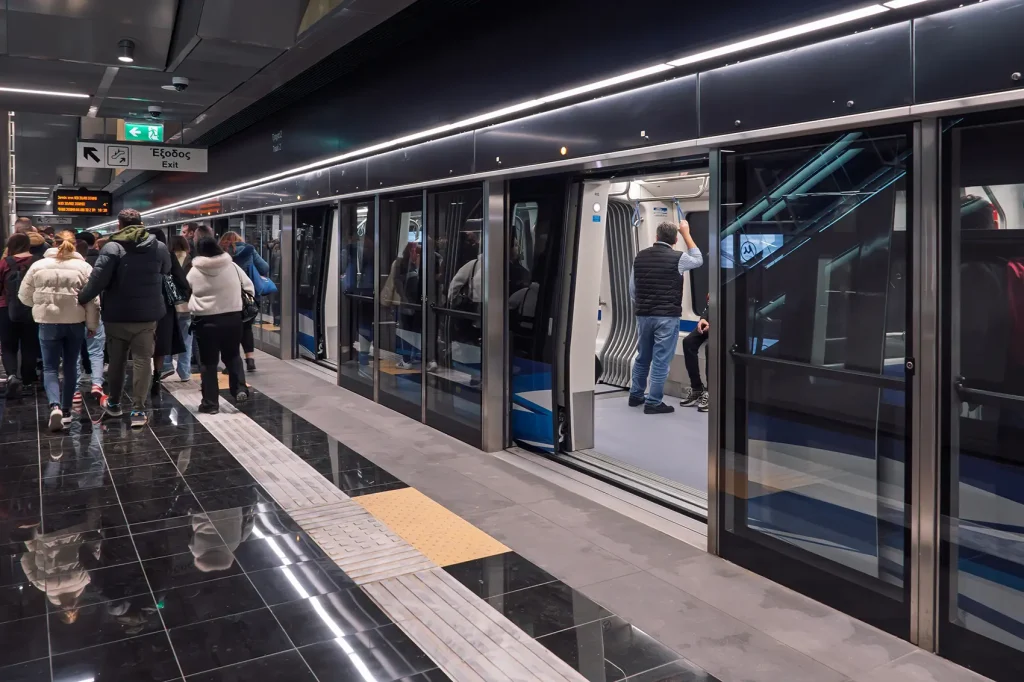
The most modern in Europe and with a station – museum!
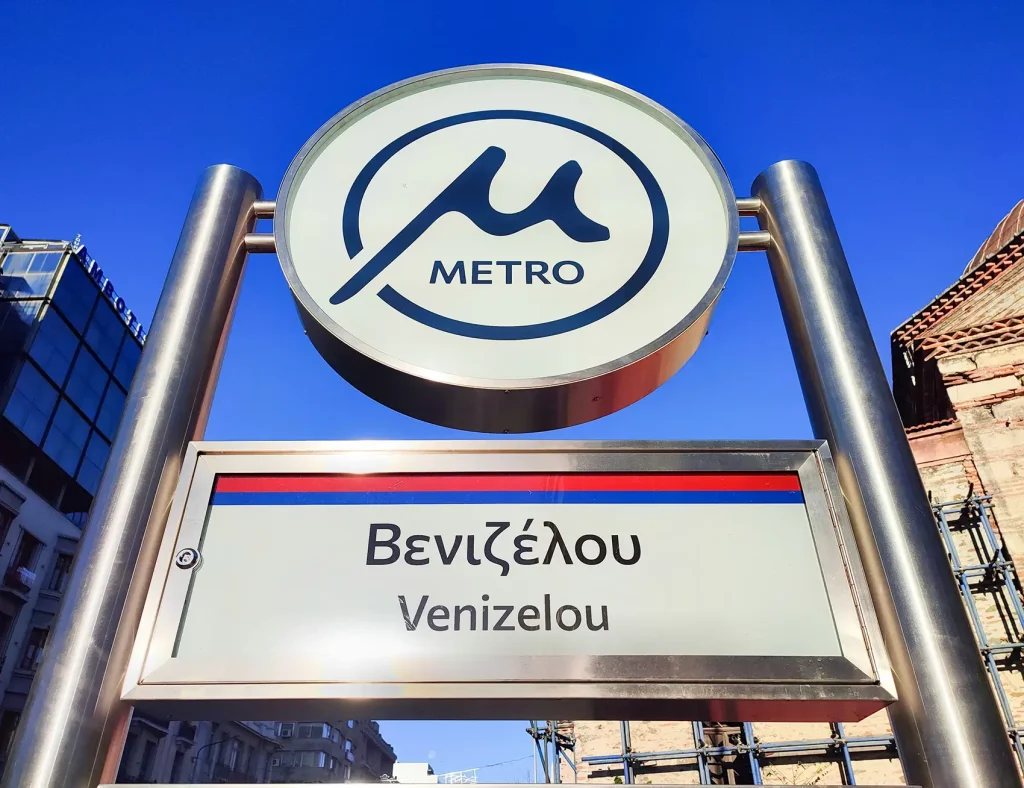
Visitors to Thessaloniki will have the opportunity to travel with the most modern metro in Europe, crossing a large part of the city in just 17 minutes! At the same time, they will be able to admire the long history of Thessaloniki at Venizelou station, which is essentially an open museum, unique in the world. The Thessaloniki Metro started operating at the end of November 2024 and its trains are fully automated and driverless.
13 + 5 stations
Today, the metro of Thessaloniki has 13 state-of-the-art stations, with trains running from Nea Elvetia (eastern Thessaloniki) to the Railway Station in 17 minutes and 30 meters underground. The stations are: New Railway Station, Dimokratias, Venizelou, Agias Sofias, Sintrivani, Panepistimio, Papafi, Efkleidis, Fleming, Analipsi, 25th Martiou, Voulgari, Nea Elvetia. In addition, five more new stations, covering the Kalamaria area, are expected to be delivered for use by passengers in the coming months.
More specifically, the metro consists of Line 1, which is 9.6 km long and the extension of Line 1 to Kalamaria, which is 4.6 km long (expected to be delivered). The starting point of Line 1 is located on the north-western side of the city at the station called “New Railway Station”, outside the building of the Hellenic Railways Organization (O.S.E.), crossing the areas of the city centre and ending on the south-eastern side at the “Nea Elvetia” station. The underground line runs along the axes of Monastiriou, Egnatia, N. Egnatia, Delphon and Solonos streets.

How to move
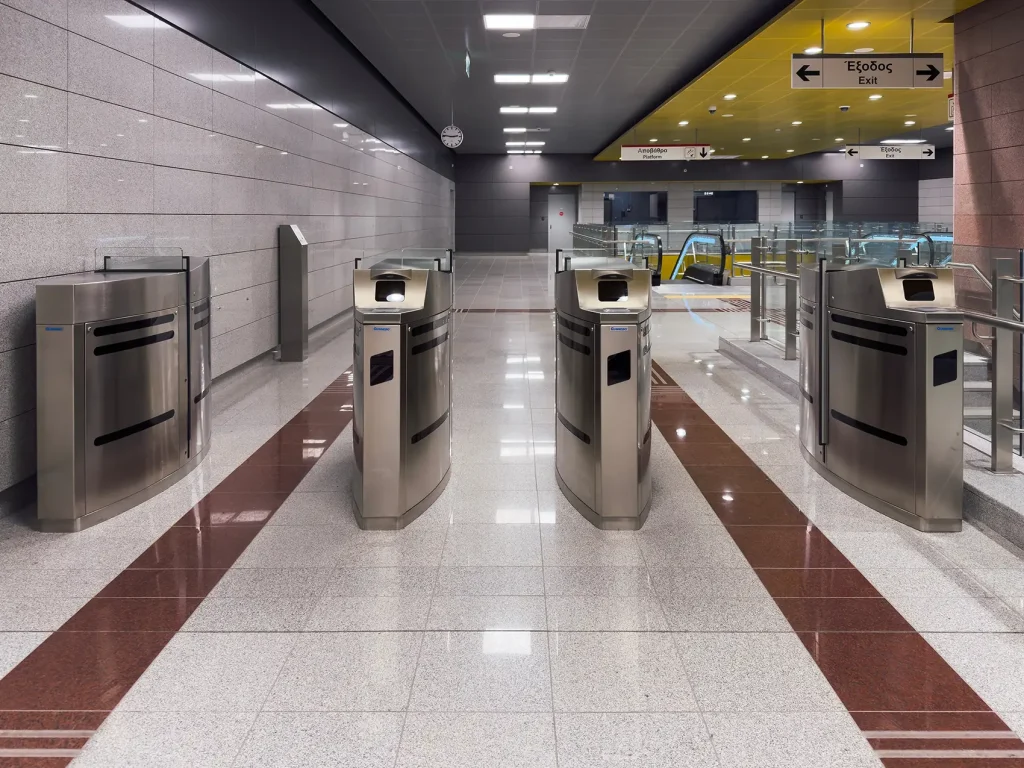
To travel by metro, tickets and cards are available from a total of 5 ticket offices and 104 automated ticket vending machines, located at all metro stations. In fact, tickets and personalized cards are loaded and reloaded at the automated ticket vending machines in the stations.
Metro fares
The cost of the tickets starts at €0.60 / normal (€0.30 reduced) with a duration of 70 minutes from the first validation and allows unlimited metro journeys within this period. There is also a daily ticket costing €2.50 and valid for 24 hours, a bundle of tickets and a personalized 30, 90 and 180-day unlimited travel card. More information on tickets, cards and timetables can be found here https://www.thessmetro.gr/en/tickets/.
Useful information
The stations have lifts and escalators to meet accessibility needs and there are cameras and trained staff that passengers can contact for anything they need. It is good to know that in the first and last carriage of each train there are designated areas with available room for wheelchairs and baby carriages. There is also space for users of conventional bicycles in the last carriage. However, the entry and transport of electric bicycles and electric scooters is prohibited in metro stations and trains, and smoking and the consumption of food and beverages is also prohibited.
Meet a museum – station
In addition to the incredible convenience with which one can now cross a large part of the city, the antiquities found during the works, many of which are on display at the Venizelou station, are also extremely important. The route of the metro in the centre of Thessaloniki essentially follows the main street of ancient Thessaloniki, which was surrounded by columns and tunnels and had a 16-metre wide pavement.
More specifically, at Venizelou station, most of the archaeological items found during the construction works have been placed back in their original position and visitors can admire them by walking on transparent glass floors and corridors and passing directly above them. The spectacle is particularly impressive as this is the first of its kind station – an open museum – in the world.
The antiquities found during the construction by the archaeologists outline a 24-century history. Among other things, the main road of Thessaloniki, the Decumanus Maximus of the Romans (today’s Egnatia), a series of pedestals for the placement of statues at the entrance of the city and a bath complex, which is estimated to have been used from the 1st century BC to the 7th century AD, were found.
The Venizelou station-museum has an area of 1,260 square meters, while archaeological excavation has brought to light all of the earliest building and chronological phases of Thessaloniki, from the Hellenistic period. In particular, apart from the Roman road or Byzantine road, an amazing building complex of the urban fabric of late antiquity was also found.