
- Get directions
- Share
- Report
- prev
- next
Information
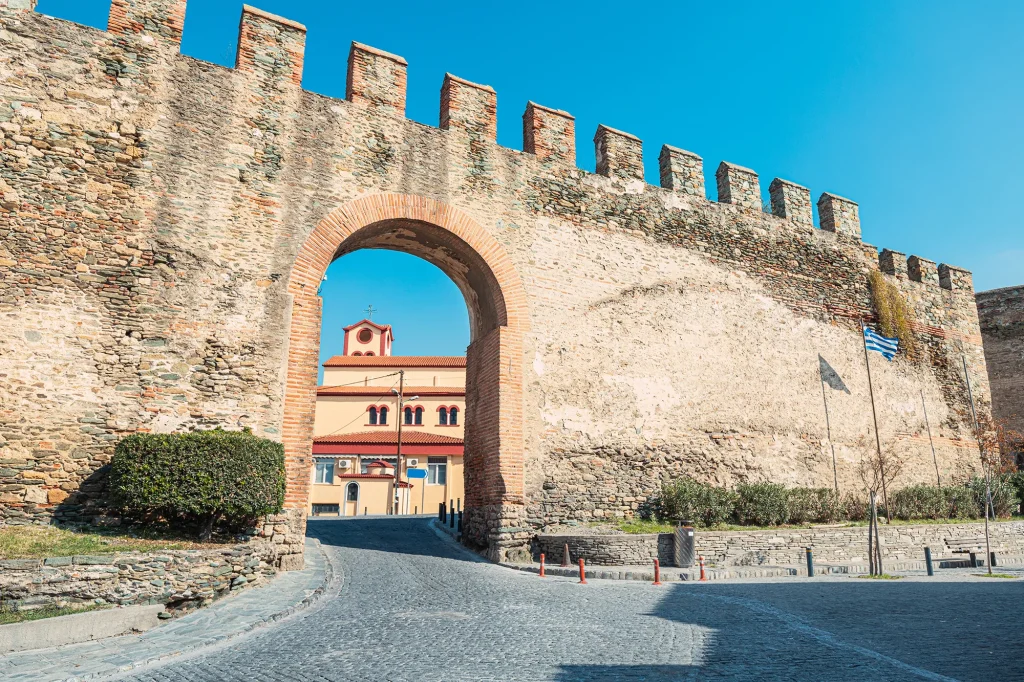
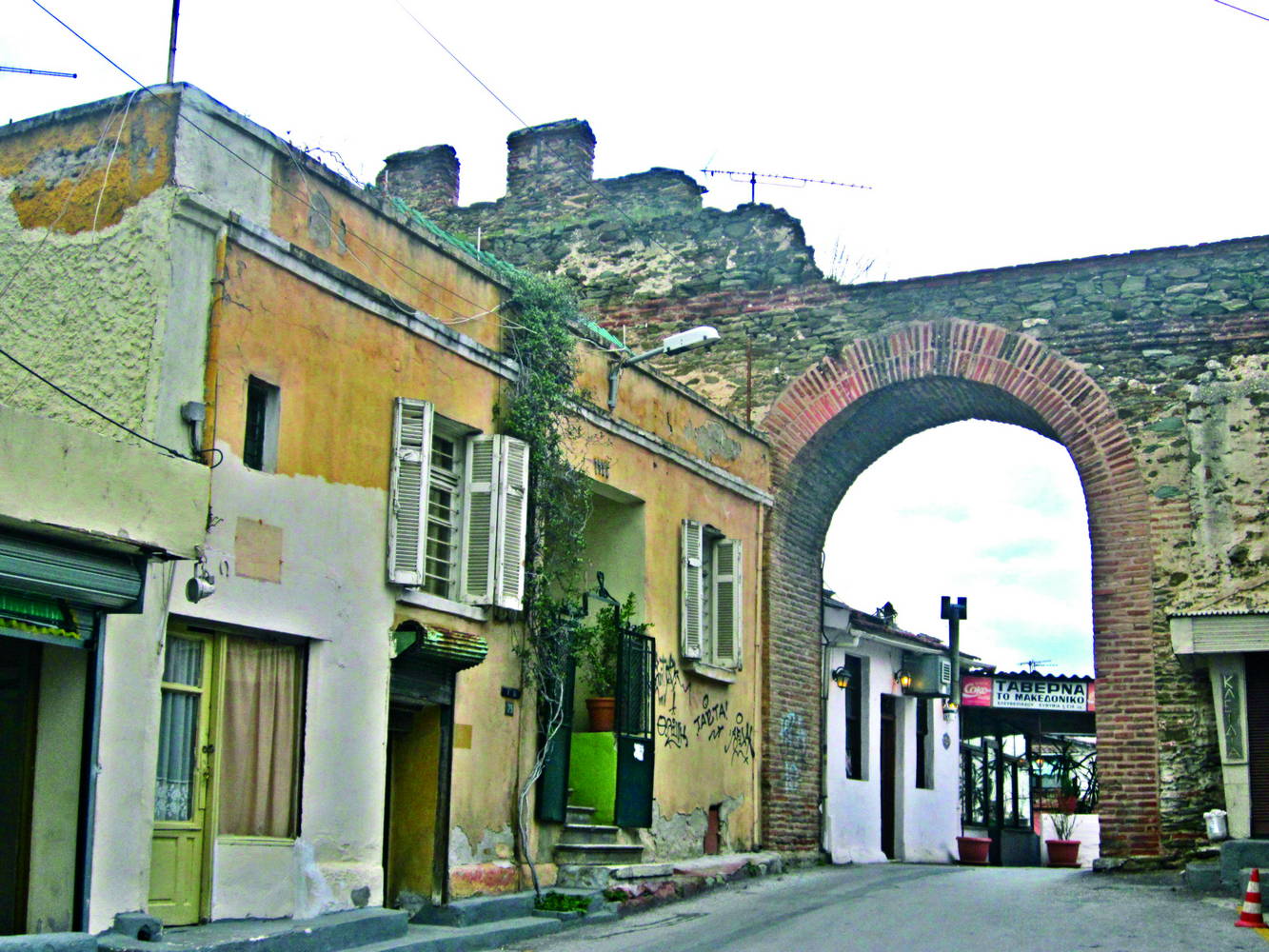
Thessaloniki's Walls, also known as the Kastra or Fortress, were built and maintained over centuries, beginning with the city's foundation by Cassander in 316 BC and continuing until the early 20th century. These walls saved the city from external enemies on numerous occasions. The Byzantine period saw the construction of the most expansive and well-preserved sections, particularly during the reign of Emperor Theodosius in the 4th century AD. Today, roughly 4,300m of the original 8,000m of Byzantine walls still remain.
The Kastra encompassed the northernmost part of the city, including the Acropolis, as well as the eastern and western sides that extended down to the seafront. The Golden Gate was the main entrance on the west side, located in what is now Dimokratias Square (Vardaris district). A small octagonal tower was part of the western fortress and can still be seen behind the courthouse. The Eastern Walls began at the Triangle Tower on the edge of the Acropolis and featured the well-preserved Gate of Anna Palaiologou. The Cassandrian Gate stood where Syntrivani Square now stands, while the Coastal Gate was near the sea. The White Tower was one of the towers that strengthened the fortification of the walls.
The Turkish army demolished the sea walls between 1873 and 1911 to provide the city with a cooling sea breeze, and parts of the western and eastern land walls were also destroyed to expand the city beyond its original fortified limits.
Open
Open 24h today
Toggle weekly schedule
-
Monday
Open 24h
-
Tuesday
Open 24h
-
Wednesday
Open 24h
-
Thursday
Open 24h
-
Friday
Open 24h
-
Saturday
Open 24h
-
Sunday
Open 24h
23/11/2026 06:00 local time
Location
-
Sykies, Thessaloniki